


Just four per cent of New Brunswick’s viable farmland is in active agricultural use, according to the province, and New Brunswick produces less than 10 per cent of its own vegetables.
Province, farming groups to work with municipalities on identifying farmland

Raechel Huizinga · CBC News
· Posted: Apr 06, 2026 5:00 AM EDT | Last Updated: 2 hours ago

Listen to this article
Estimated 5 minutes
The audio version of this article is generated by AI-based technology. Mispronunciations can occur. We are working with our partners to continually review and improve the results.
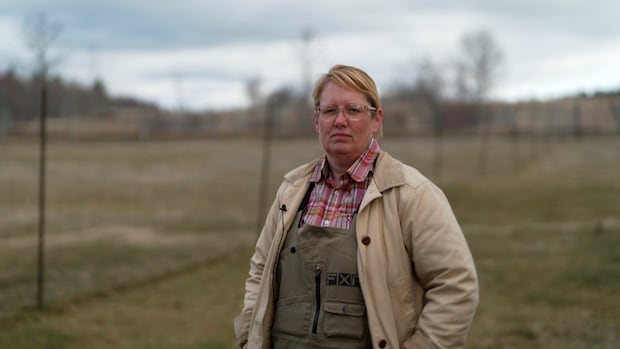
 Danielle Connell, president of New Brunswick’s Agricultural Alliance, says ‘serious reforms’ to the Farm Land Identification Program are coming in 2026. (Aniekan Etuhube/CBC News)
When Danielle Connell bought the farm she passed on the school bus for 12 years, one of the first things she did was get rid of the rat poison.
Connell, who started her Lower Cambridge farm with her partner in 2021, knew the return of natural predators like weasels would neutralize her mouse problem. She put the same faith in her sheep; livestock brings bugs, bugs bring birds. Now, walking through her barns, you can hear the singing of house sparrows and swallows, a vocalization of an ecosystem restored.
Farmland restoration, though, is not always so simple. For idle properties overrun by trees,
This story was brought to Nouzie by RSS. The original post can be found on https://www.cbc.ca/news/canada/new-brunswick/new-brunswick-farmland-reforms-9.7148268?cmp=rss

