


The Issue
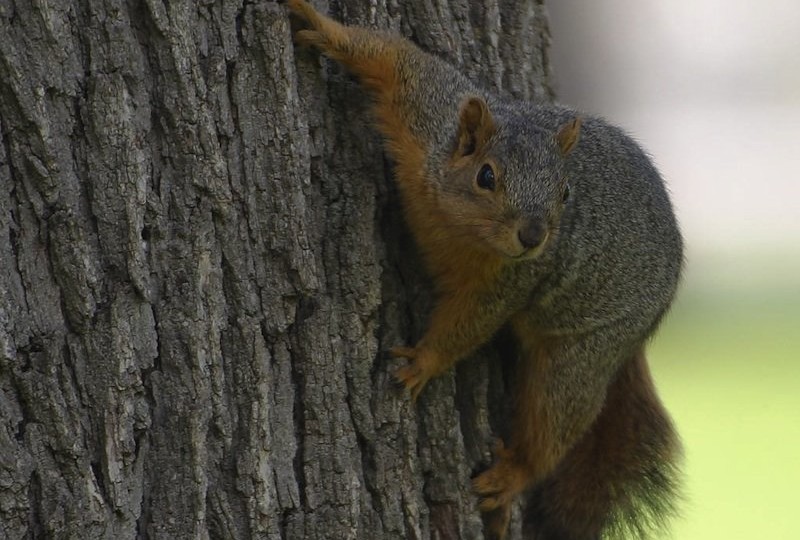
In 1904 William James delivered a lecture entitled What Pragmatism Means in which he illustrates his position with an anecdote about a camping trip and a squirrel. When James returned to the campsite after a walk in the woods he found the group engaged in a ferocious debate. As James describes it,
“The corpus of the dispute was a squirrel – a live squirrel supposed to be clinging to one side of a tree-trunk; while over against the tree’s opposite side a human being was imagined to stand. This human witness tries to get sight of the squirrel by moving rapidly round the tree, but no matter how fast he goes, the squirrel moves as fast in the opposite [same?] direction, and always keeps the tree between himself and the man, so that never a glimpse of him is caught.”
The question being debated was, Does the man go around the squirrel or not? Some of the campers insisted the man did go around the squirrel and an equal number were adamant he did not. They asked James to decide the issue.
We might clarify the situation by getting the tree out of the way. Imagine the tree had been previously chopped down and the squirrel sat on the stump and continually faced the man. What do you think, does the man go around the squirrel?
The solution?
James’ proposed this solution: If you say “to go around” means to be in front, then to the right, then behind, then to the left, and then in front again then the man did not go around the squirrel. If you say to go around means to be to the North, then to the East, then to the South, then to the West, and then to the North again, then the man did go around the squirrel. James’ overall point is that many disputes are the result of not defining our terms. How should we determine, as in this case, which is the better definition? For James the oversimplified answer is, if it works for you to define going around in one way rather than the other then that preferred definition is true for you.
Is there any way to determine which side is right in this dispute? Let’s look at it a little closer.
If you say “to go around” means to be in front, then to the right, then behind, then to the left, and then in front again: if the squirrel is on a turntable which spins the squirrel around in front of the man, does the man go around the squirrel?
If you say to go around means to be to the North, then to the East, then to the South, then to the West, and then to the North again: (1) is it equally true that the squirrel went around the man? (2) if the squirrel and the man sit opposite each other on a spinning turntable, does each go around the other?
Stumped? (Sorry for the pun.) See the second part of this issue.

