


During the summer months, the Irishtown Road Reservoir just north of Moncton would typically be full of canoers, kayakers and dogs playing fetch. But right now it’s full of something entirely different — cyanobacteria.
Also known as blue-green algae, the bacteria typically “blooms” during extended periods of hot weather. It’s known to cause “skin, eye and throat irritations” in humans, and can cause things like vomiting, seizures and even death in dogs that drink water containing the toxin, according to the government of New Brunswick’s cyanobacteria information page.
The City of Moncton closed the reservoir to recreational use on July 14 after cyanobacteria was found during routine testing.
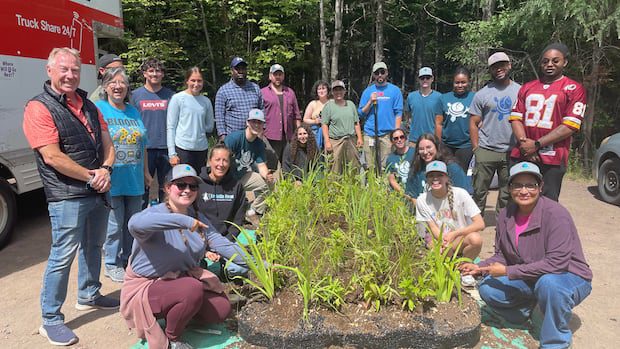
Now, the Petitcodiac Watershed Alliance is trying a new idea, known as a floating island, to prevent cyanobacteria blooms from forming in the future.
The group has built an artificial island full of plants that will reduce levels of nutrients in the water that cause blue-green algae blooms.
Last Friday, the team launched the island into its new home in the reservoir.
“We are installing a lot of native, water-loving plants onto the island, and all these will have their roots grow through the bottom of the island to facilitate the growth of a biofilm,” said Will Peabody, project leader at the Watershed Alliance.
“This is exactly why we need this,” said Peabody of the current algae bloom.
WATCH | 75 native plants now float in the middle of the Irishtown Road Reservoir:

Irishtown floating island aims to reduce cyanobacteria blooms
Blue-green algae often takes over the popular canoeing spot in the summertime, » Read More
This story was brought to Nouzie by RSS. The original post can be found on https://www.cbc.ca/news/canada/new-brunswick/cyanobacteria-blooms-irishtown-plant-island-9.7279788?cmp=rss

