


This is the second issue in a series that began with the question about a man going around a squirrel.
The issue
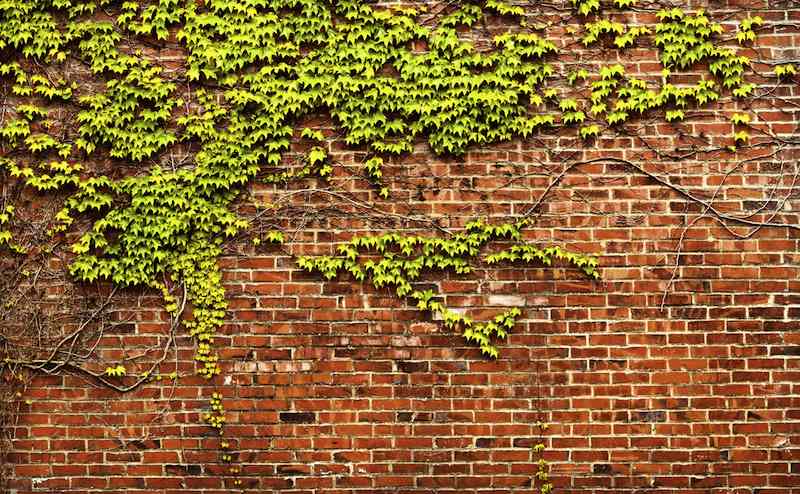
Imagine a brick wall. If we replace one of the bricks do we have a new wall? If we replace half plus one of the bricks do we have a new wall? If we replace all the bricks do we have a new wall?
If we remove the bricks one by one and stack them in their original order two meters away, when we are finished we have the same bricks but in a new location. Do we have a new wall?
The problem of change
When something changes we expect some aspect to be the same and some other aspect to be different (as a friend of mine used to say, “It’s the same but different”). In other words for something to change there must be some continuity or else there wasn’t a simple change but a complete destruction of what we began with and the creation of what we wound up with.
In the example of the brick wall, were all the scenarios instances of change or was at least one an instance of complete destruction of the original wall and creation of a new wall? If any scenario was an instance of change, what remained the same allowing us to say the wall has been changed but it is still the same wall?
Consider yourself. You were once a newborn and are now many years older. If you are over seven years old, all the cells in your body have been replaced, yet you consider yourself to be the same person that was born years ago. What provides the continuity, what about you has remained the same through all that time?
Some might suggest the continuity is provided by your memory. But if you suffered complete amnesia, would you still be the same person or would “you” be a new person while the old “you” has disappeared? If yes, what if you suddenly got your memory back? Has the new “you” disappeared and the old “you” suddenly appeared.
Others suggest some feature of you remains constant; perhaps fingerprints or the colour of your eyes. But an accident could remove your fingers or your eyes, in which case are “you” still you?
Many suggest that what remains constant is your soul. But then what is the soul and does a brick wall need one in order to change but remain the same?
If one maintains that at some point in replacing bricks we have a new wall how is it that the last change in a series of similar changes brought about a new wall and not just a changed wall.
Faced with this puzzle about change two opposite positions emerge: one is that nothing really changes and the other that nothing remains the same. That’s next when we consider The River and the Arrow the river and the arrow.

