


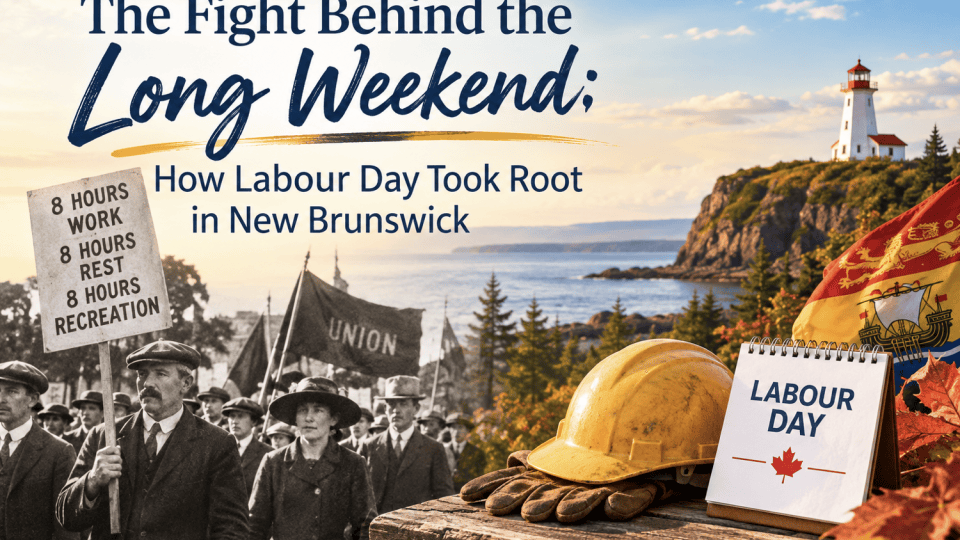
Every first Monday of September, Canadians trade their work boots for lawn chairs. This year that lands on September 7 — a day off for most, but one whose quiet rhythm of parades, picnics and back-to-school sales conceals a hard-fought history.
Labour Day in Canada traces its origins to 1872, when some 60 typographers walked off the job in Toronto demanding a nine-hour workday. Their employer’s retaliation was blunt: the union leaders were arrested for criminal conspiracy. The move backfired spectacularly. Tens of thousands marched in solidarity, and within weeks Prime Minister Sir John A. Macdonald promised to repeal the anti-union laws. The following year, the same Toronto printers staged a parade — widely considered the first Labour Day celebration in North America. By 1894, Parliament declared the first Monday of September a national holiday.
But long before Ottawa made it official, the Maritimes were already marching.
New Brunswick’s place in the story
Saint John lays claim to one of the oldest continuous Labour Day parades on the continent, with roots stretching back to the late 1800s. That pedigree makes sense for a city built on muscle and tidewater. Through the 19th century, Saint John was one of British North America’s great industrial ports — its shipyards launched hundreds of vessels, its dry docks and foundries employed generations of workers, and its waterfront trades organized early and loudly. The Saint John Trades and Labour Council helped carry that tradition forward, and for well over a century the city’s Labour Day parade has wound through the uptown streets, led by union locals, pipe bands and floats.
The symbolism runs deeper than nostalgia. New Brunswick’s economy has long leaned on resource and seasonal industries — forestry, fishing, mining, food processing — where working conditions were often brutal before collective bargaining took hold. Labour Day in the province is therefore not merely a farewell to summer; it marks the gains won by generations of millwrights, longshoremen, cannery hands and railway workers who pushed for safer workplaces, reasonable hours and the right to organize.
What the day looks like now
Across the province, the observance varies by community. Saint John keeps the parade tradition alive downtown. Moncton and Fredericton host family-friendly gatherings and sports tournaments. Miramichi and smaller towns fold the holiday into end-of-summer fairs. Elsewhere in Canada it’s much the same: union breakfasts and rallies in larger cities, backyard barbecues everywhere, and the unofficial close of cottage season as students prepare to head back to class.
Retailers, meanwhile, treat it as a launchpad for fall sales — a commercial gloss that sits uneasily beside the holiday’s origins. Some provinces have brought in rules requiring many stores to stay closed on Labour Day, though New Brunswick allows most retailers to open, leaving the choice largely to individual businesses.
Why it still matters
It is easy to forget, on a long weekend, that the stat holiday commemorates a fight — one that started with printers jailed simply for organizing. The nine-hour day they demanded is now taken for granted; so are weekends, overtime pay, workplace safety standards and the very unions that once faced criminal charges. Labour Day is the annual reminder that none of those arrived by goodwill alone.
So when the parade passes in Saint John this morning, or the grill fires up in a Fredericton backyard, it’s worth remembering the marchers who came first — and the working people the day still honours.

