


New Brunswick·New
A lot may have changed in New Brunswick in the 12 years since a moratorium was imposed on shale gas exploration. But one thing hasn’t: what’s under our feet.
Rock does move, but not very fast, so the geological situation hasn’t changed much since the moratorium
Jordan Gill · CBC News
· Posted: Oct 24, 2026 5:00 AM EDT | Last Updated: 27 minutes ago

Listen to this article
Estimated 4 minutes
The audio version of this article is generated by AI-based technology. Mispronunciations can occur. We are working with our partners to continually review and improve the results.
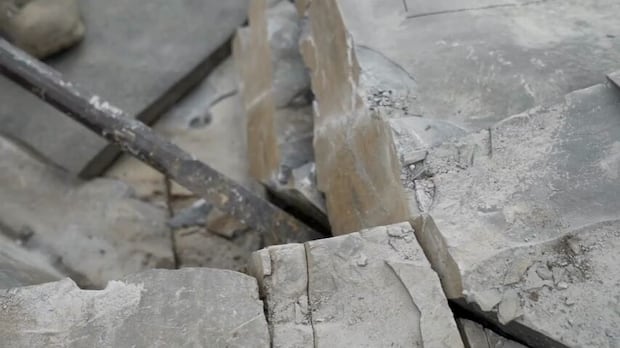
 Buried beneath southern New Brunswick is a lot of shale rock that got its start about 350 million years ago. (CBC)
A lot may have changed in New Brunswick in the 12 years since a moratorium was imposed on shale gas exploration.
But one thing hasn’t: what’s under our feet.
We know there is some shale gas trapped in rock under the soil.
The New Brunswick government estimates the province has 77 trillion cubic feet of shale gas in two known gas fields. In comparison, the much larger province of Alberta has 3,455 trillion cubic feet.
In southern New Brunswick, the McCully Field near Sussex has an estimated 67.3 trillion cubic feet of gas, and to the northeast of it,
This story was brought to Nouzie by RSS. The original post can be found on https://www.cbc.ca/news/canada/new-brunswick/shale-rock-the-geological-picture-9.7391406?cmp=rss

