

So what’s driving New Brunswick’s happiness?
The survey doesn’t offer a single smoking gun, but the pattern is consistent with what researchers and residents have been saying for years. New Brunswick punches well above its weight on the things that quietly matter most: community cohesion, lower commute times, access to nature, and a cost of living that hasn’t yet crushed people’s ability to enjoy life outside of work.
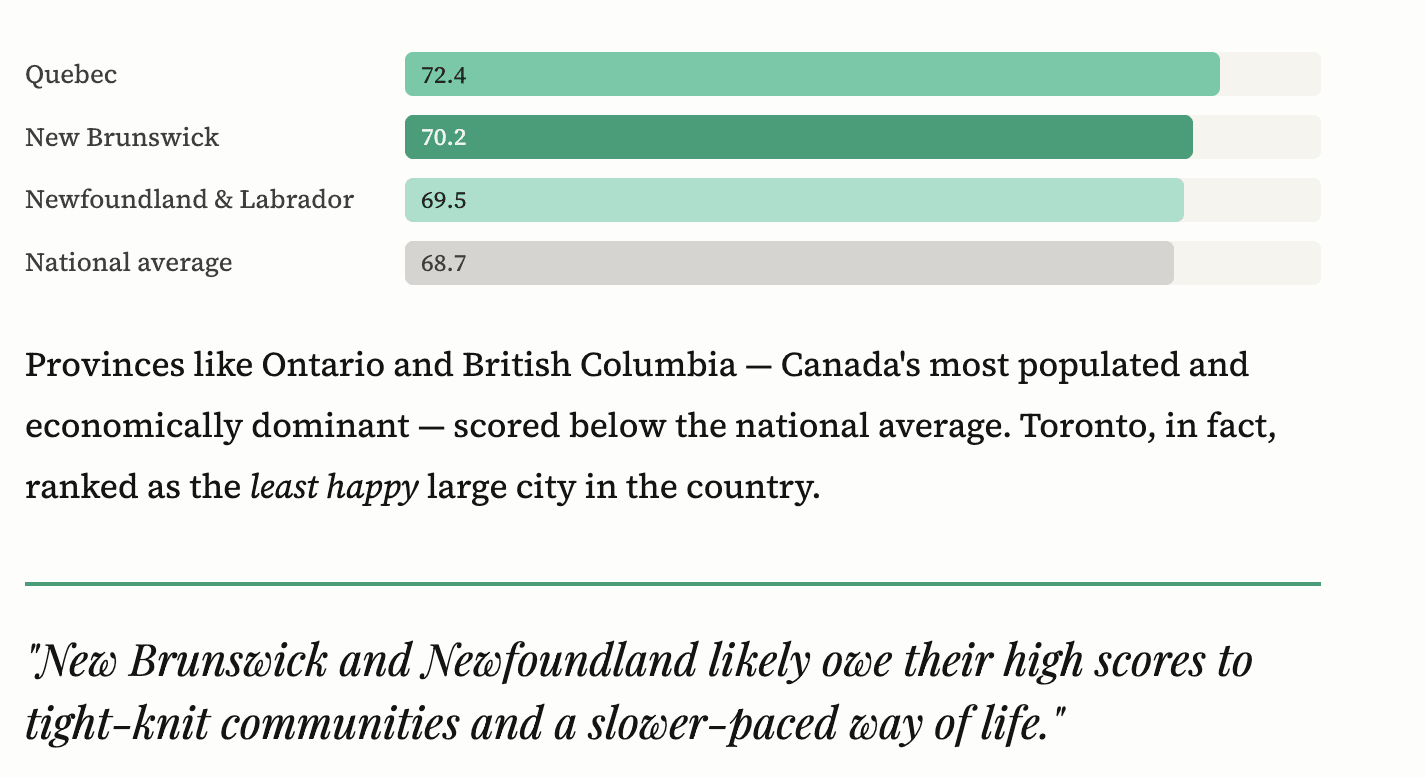
Housing costs in New Brunswick remain among the lowest in Canada, especially compared to Ontario and British Columbia. Utilities are generally below the national average, and the province’s cities and towns are navigable in ways that Toronto or Vancouver simply aren’t. Less time in traffic and less stress about rent has a way of nudging a happiness score upward.
There’s also something harder to quantify at play — the kind of social fabric that comes from living in a place where people actually know each other. Communities in New Brunswick, whether English or French, tend to maintain the sorts of local ties and mutual recognition that larger cities have progressively lost.
The province nobody talks about
New Brunswick has historically been easy to overlook in national conversations. Its economy lags behind most provinces, its population is smaller than many individual Canadian cities, and it rarely drives the kind of newsworthy moments that put a place on the national map.
But this survey is a reminder that the metrics we default to — GDP, population growth, tech sector jobs — aren’t the only ones that matter. When you ask people directly how they’re doing, New Brunswickers, it turns out, are doing pretty well.
For a province that’s used to flying under the radar, landing second on a national happiness ranking might be the quietest, most fitting win imaginable.

