


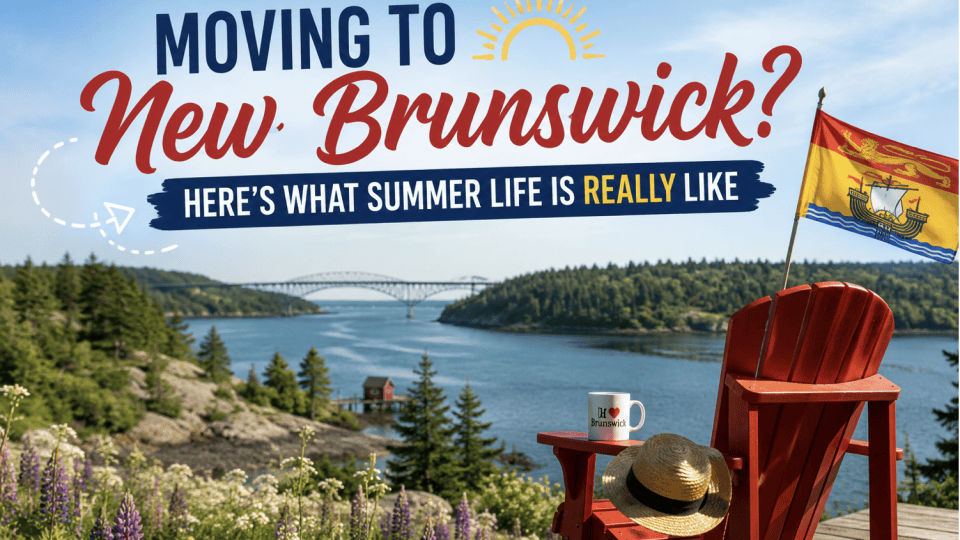
If you’re picturing your first New Brunswick summer, you’re probably imagining lighthouses, lobster rolls, and quiet coastal roads. You’re not wrong. But there’s a lot more to know before you pack the car — especially if you’re used to a different climate, pace of life, or idea of what “summer” even means.
Here’s the honest version.
The Weather Is Better Than People Expect
New Brunswick has a reputation for long, hard winters, so newcomers are often pleasantly surprised by summer. Days regularly reach 22–28°C (72–82°F) from June through August, with plenty of sunshine. The Bay of Fundy side stays cooler and foggier, while inland areas like Fredericton and the Miramichi region can get genuinely hot and humid for stretches.
Pack for both. You’ll want shorts and sandals most days, but a light jacket for evenings never hurts, especially near the coast.
The Bugs Are a Rite of Passage
Nobody warns you enough about this one. Blackfly season runs roughly from May into June, and mosquitoes stick around all summer, especially near rivers, lakes, and wooded areas. Locals just build it into their routine — bug spray by the door, screened porches, citronella candles on the deck.
It fades by midsummer, but the first few weeks after you move in can be a genuine adjustment.
Water Is Everywhere, and Locals Use It
New Brunswickers organize their summer around water. The province has the warmest saltwater beaches north of the Carolinas along the Northumberland Strait, places like Parlee Beach near Shediac get warm enough for comfortable swimming by July. Meanwhile, the Bay of Fundy side offers a completely different experience: dramatic tides, cold water, and scenery that feels more rugged than relaxing.
Rivers and lakes are just as central. Canoeing, kayaking, and lakeside cottages are a normal part of summer life here, not a luxury activity.
Festival Season Kicks Into High Gear
Summer is when the province comes alive socially. Small towns and cities alike host festivals almost every weekend, covering everything from seafood and music to Acadian culture and local arts. If you’re new, this is genuinely one of the easiest ways to meet people and start feeling like part of a community rather than just someone who recently moved in.
The Pace Is Slower, and That’s the Point
If you’re coming from a bigger city, expect an adjustment period. Stores may close earlier, service can be unhurried, and plans often get made a day or two ahead rather than weeks out. This isn’t inefficiency, it’s a different relationship with time. Most people who move here end up appreciating it once they stop fighting it.
Cost of Living Still Favors You in Summer
Outdoor recreation here is cheap or free. Beaches, hiking trails, and provincial parks don’t come with the price tag you’d see in bigger tourist regions. Housing costs remain lower than much of the rest of Canada too, so your summer months can go further, whether that means more camping trips, more time on the water, or simply less financial stress while you settle in.
A Few Practical Tips for Newcomers
- Book camping and cottage rentals early. Popular spots fill up by spring for July and August weekends.
- Learn a bit of both languages. New Brunswick is Canada’s only officially bilingual province, and knowing a little French goes a long way, especially in the north and east.
- Get outside early in the season. Summer feels short after a long winter, and locals treat every good weekend as one to use.
- Expect some road construction. Summer is prime season for it, so build extra time into longer drives.
The Bottom Line
Summer in New Brunswick isn’t flashy, it’s not a Instagram-perfect postcard every single day. But it’s warm, social, affordable, and genuinely enjoyable once you settle into the rhythm. Most people who move here for a job or a change of pace say the same thing by August: they didn’t expect to love it this much, but they do.

