


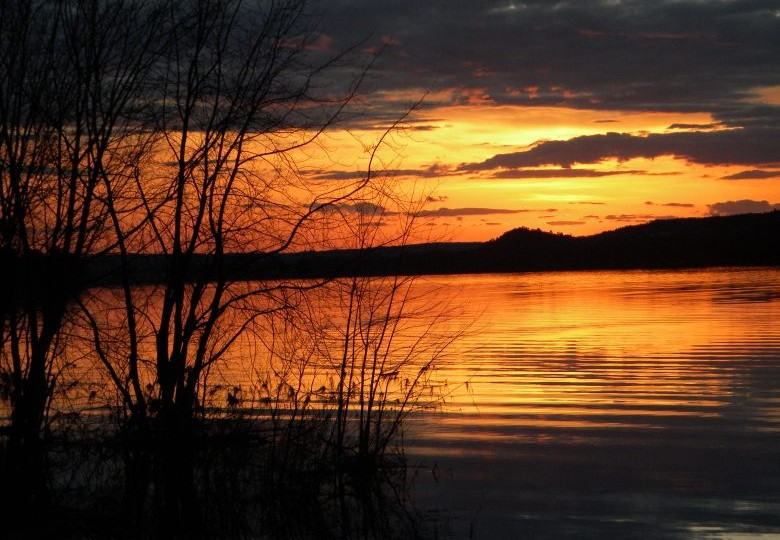
In remote parts of Canada, northern Canada, in particular, people refer to being outdoors as being “out on the land.” The chances are good that if you ever find yourself someplace way off the beaten trail, somewhere at the end of the road less travelled, a place like, oh let’s say, Snafu Creek, Yukon Territory — and you ask a local where your fishing guide might be, “out on the land,” would most likely be the answer.
Out on the land; it’s got a nice ring to it, especially the way my Mi’kmaq and Maliseet friends say it. Implying reverence, they subtly honour what for them is sacred by rhythmically emphasizing “The Land.” It sounds like poetry to me.
I first noticed this many year’s ago while sitting around a campfire with two Maliseet friends near Molly’s Rock on the Eel River. They were traversing the Ancient Maliseet Canoe Trail from Benton, New Brunswick to Old Town, Maine — the first all-Aboriginal canoe trip down the water trail in more than a hundred years. When Caesar ruled Rome, Indigenous Peoples were travelling this route. Spending the first night of their seven-day odyssey with them was an honour.
Sitting around a campfire with people whose connection with the land goes back millennia is both humbling and inspiring — especially when they’re tracing the sacred steps and paddle strokes of their forbears. During their journey, my friends will discover footsteps worn into stone by their ancestors. When they make this discovery, they will honour the land by making an offering of tobacco and sweetgrass to attract good spirits and positive energy.
Good spirits and positive energy surrounded us that night near Molly’s Rock as we shared our stories beside the fire. Sometimes we would stop talking and just sit there transfixed watching red sparks ascend into the darkness, the only sound the crackling of the fire. Through the lens of our own cultural experiences, each of us honoured the moment and the land in our own way. It was a solemn and sacred experience.
Solemn and sacred was not what I experienced recently as I traced the route I take every spring to one of my favourite wilderness places in New Brunswick. Getting out of the car and starting down the trail, my heart sank. There were coffee cups, fast-food wrappers and off in the woods here and there, beer cans. Worse, American beer cans!
Further along, in what used to be a lovely spot beside the river surrounded by a clump of young cedars, someone built a fire. They stripped the cedar branches and threw them on the fire, presumably just for the fun of creating a lot of smoke. Reaching down to pick up the cans, I noticed broken glass.
As sad as I felt standing there looking at the fire pit and the burned roots of the surrounding trees, I wondered how the owner of this land would feel when they see this. Turning a place of beauty into a garbage dump is not only unfair to private landowners; it’s unfair to everyone who loves getting out on the land.
With so much coming at us from every direction every day, getting out on the land and experiencing the peace and solitude of nature is even more critical. We are blessed to live where we do; blessed to enjoy diverse land and seascapes that people come from all four corners of the globe to experience and discover. But we can’t take the beauty of our province for granted. We have to be vigilant, especially with so many people now accessing the wilderness in ways that 50 years ago were never possible.
It’s wonderful to see so many New Brunswickers getting out on the land and learning and discovering more about their province. A quick scan of social media platforms such as Facebook and Instagram, reveals remarkable photos of our province. An important message in those seductive photographs is that by honouring the land, we honour ourselves. Pack it in. Pack it out. Leave the land the way you found it.
As we did on that long-ago night on the Maliseet Trail, when good spirits and positive energy surrounded us, each person honours the land in their own way. Doing so is part of being human. I am grateful for that night out on the land, grateful for the memory of just sitting there, transfixed, watching red sparks ascend into the darkness, the only sound the crackling of the fire.

