


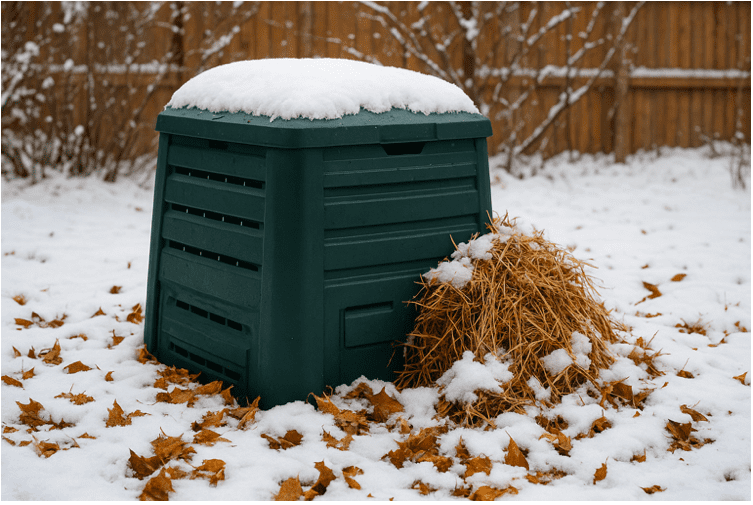
Composting doesn’t have to stop when the temperature drops. Even in New Brunswick’s chilly winters, you can keep turning food scraps and yard waste into rich, nourishing compost for your garden. With a few adjustments, cold-weather composting can be just as rewarding — and more eco-friendly than ever. Here’s how to get started.
1. Choose the Right Compost Bin
In cold climates, an enclosed compost bin works best. It helps retain heat and keeps snow and critters out. If you can, pick a bin made of dark material — it will absorb more sunlight and stay warmer during the day. Some people even insulate their bins with straw bales or old blankets to protect the contents from freezing solid.
2. Balance Your Greens and Browns
Just like summer composting, you’ll want a good mix of:
Greens (nitrogen-rich materials): fruit and vegetable scraps, coffee grounds, tea bags.
Browns (carbon-rich materials): dry leaves, shredded paper, cardboard, or sawdust.
In winter, brown materials can become scarce, so it’s smart to stockpile leaves in the fall. Mix them into your bin through the colder months to keep your compost balanced and prevent it from getting soggy or smelly.
3. Chop and Layer Your Materials
Since decomposition slows down in cold temperatures, smaller pieces break down faster. Chop up your food scraps and layer them — alternating greens and browns — to create air pockets and maintain good airflow.
4. Keep Moisture in Check
Winter air can be dry, especially if your compost bin is covered. Check moisture levels occasionally — your compost should feel like a wrung-out sponge. If it’s too dry, add a splash of water; if it’s too wet, mix in more browns like shredded paper or leaves.
5. Add Insulation and Turn Occasionally
Add an insulating layer of straw, cardboard, or leaves on top of your compost pile to help trap warmth. Turning your compost every few weeks keeps oxygen flowing and helps maintain microbial activity — even if the process slows down a bit in freezing weather.
6. Don’t Worry if It Freezes
It’s normal for compost to freeze in winter — the process will simply pause. Once spring arrives and temperatures rise, decomposition will pick up again quickly. Those winter scraps will jumpstart your compost pile as it thaws.
7. Bonus Tip: Try Indoor Composting
If outdoor composting isn’t practical during the coldest months, consider indoor options like a worm bin (vermicomposting) or a countertop electric composter. These can process kitchen scraps year-round and produce nutrient-rich material for your garden when spring returns.
Final Thoughts
Composting in cold weather might take a little extra patience, but it’s absolutely possible — and worth it. By keeping your compost active through winter, you’ll reduce waste, enrich your soil, and be ready to start the growing season with a head start.

