


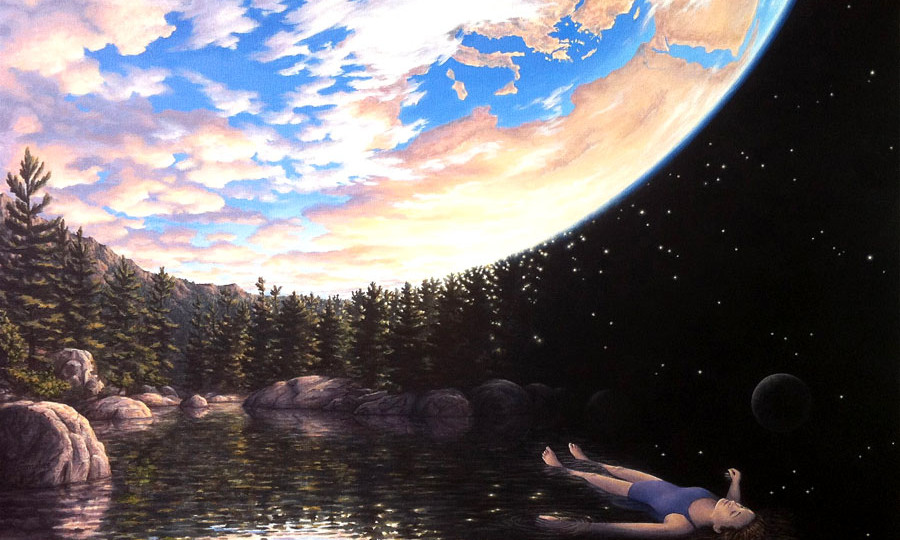
We’ve seen that change, including motion, presents a puzzle: we see it but it’s impossible. If so, there must be a distinction between how things appear and how they really are.
Our everyday experience tells us as much. From mirages and other optical illusions, to magicians’ tricks, to deceptions large and small, to just plain old misunderstanding, we constantly have to appreciate the distinction between the way things appear and the way they really are.
Consider the colour of the walls in a room. Light falls on the walls from many angles and the colour of the walls varies everywhere: the bottom, top, middle, edges and corners all appear to be different colours. And those colours change as the day goes on. Yet we “see” them as the same colour because we “know” them to be the same colour even though they appear not to be the same.
So we learn early that appearances can be deceiving. Might they always be deceiving? How do we know when we are being deceived and when we have a true understanding of the underlying reality?
These everyday situations of doubt have led some to seek certainty in distinguishing between appearance and reality, to seek absolutely true knowledge of the way things really are. The desire to know has led people along many different paths: science, philosophy, art, mathematics, theology, the occult and so forth.
The assumption is that we can know, at least to some extent, and that is also the hope. Whether we can know with absolute certainty is another matter.
We’re getting into tough questions so next let’s consider the biggest and toughest questions and how to go about answering them.
[Featured image by Rob Gonsalves, an artist from Toronto. See source: here.]

