


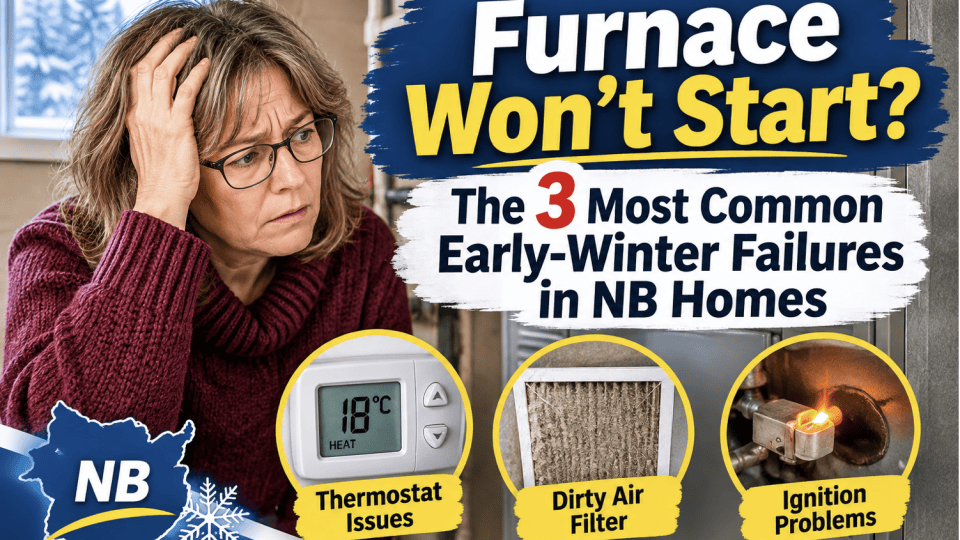
There’s a particular kind of dread that comes with the first cold snap in New Brunswick. You turn the thermostat up, wait for that familiar rumble from the basement, and get nothing. Or worse, you get a click, a hum, and then silence.
After months of sitting idle, your furnace is being asked to go from zero to full effort, often on the coldest night so far. Most no-start calls in early winter come down to the same three culprits. Here’s what to check before you call for help.
1. A Dirty or Clogged Filter
This is the most common cause, and the easiest to fix.
Your furnace filter catches dust, pet hair, and debris all season. By the time fall arrives, many filters are packed solid, especially if they weren’t changed after last winter. A clogged filter restricts airflow, and when the furnace can’t breathe, it overheats. Modern furnaces have a safety limit switch that shuts the unit down to protect itself, so it may start, run briefly, and then quit, or refuse to fire at all.
What to check:
- Turn the furnace off at the switch or breaker.
- Slide out the filter and hold it up to the light. If you can’t see through it, replace it.
- Check the size printed on the frame so you buy the right replacement.
Prevention: Replace the filter every one to three months during the heating season. Homes with pets, wood heat as a secondary source, or ongoing renovation dust may need to change it monthly.
2. Ignition and Flame Sensor Problems
If your furnace tries to start but shuts off after a few seconds, the flame sensor is a prime suspect.
On gas and propane furnaces, the flame sensor is a thin metal rod that confirms the burners have lit. Over time it collects a fine layer of carbon and residue. When it can’t “see” the flame, the control board assumes something is wrong and cuts the gas as a safety measure. The result is a furnace that fires up, then shuts down within a few seconds, repeating the cycle until it locks out.
Oil furnaces, which are very common across New Brunswick, have their own version of this problem. A dirty nozzle, a worn ignition electrode, or a failing cad cell (the sensor that detects flame) can all stop the burner from lighting or keep it running. Oil systems that have gone a full year without a cleaning are especially prone to this.
What to check:
- Listen for the pattern: does it click and attempt ignition, then stop?
- Press the reset button on an oil burner once only. Pressing it repeatedly can flood the combustion chamber with fuel.
- If the issue persists after one reset, stop and call a licensed technician.
Prevention: Annual servicing is the single best defence. A technician will clean the sensor or nozzle, check the electrodes, and catch worn parts before they fail on a -20°C morning.
3. Thermostat and Power Issues
Sometimes the furnace is fine and the problem is upstream.
A dead thermostat battery, a wrong setting, or a tripped breaker can make it look like the whole system has failed. This is especially common after the fall clock change or after a power flicker, which is a regular occurrence during Maritime windstorms.
What to check:
- Confirm the thermostat is set to “Heat” and the target temperature is above the current room temperature.
- Replace the batteries if your thermostat uses them, even if the display still lights up.
- Check your electrical panel for a tripped breaker.
- Make sure the furnace’s own power switch (often a light-switch-style toggle near the unit) is on. These get bumped off more often than you’d think.
- For oil furnaces, check your tank gauge. Running out of fuel is a surprisingly common reason for a no-start call, and a quick look can save you a service fee.
When to Stop and Call a Professional
There’s a point where DIY troubleshooting should end. Call a licensed heating technician if:
- You smell gas, or detect a strong oil or burning odour. If you smell gas, leave the house and call your gas provider or 911 from outside.
- The furnace has locked out after resetting once.
- You hear banging, grinding, or squealing from the unit.
- Your carbon monoxide detector goes off. Get everyone out and call emergency services.
Never open sealed panels or attempt gas-line or burner repairs yourself. It’s both dangerous and, in many cases, against code.
Get Ahead of the Cold
The best time to deal with a furnace is before it fails. If your system hasn’t been serviced this year, book a tune-up now, before the real cold arrives and technicians are booked solid. Keep a spare filter on hand, check your oil or propane levels, and make sure your carbon monoxide detectors have fresh batteries.
A little prep now means a warm house when the temperature drops, and no scramble at 2 a.m. when the furnace goes quiet.
Furnace troubleshooting depends on your specific system. When in doubt, consult your owner’s manual or a qualified technician.

