


As New Brunswick considers lifting its shale gas moratorium, Mi’kmaw leaders reflect on the protests in Rexton in 2013, and share their concerns and hopes for the future of resource development on their territory.
2013 protests led to provincial government’s decision to shut down exploration
Sis’moqon · CBC News
· Posted: Oct 22, 2026 6:00 AM EDT | Last Updated: 2 hours ago

Listen to this article
Estimated 6 minutes
The audio version of this article is generated by AI-based technology. Mispronunciations can occur. We are working with our partners to continually review and improve the results.
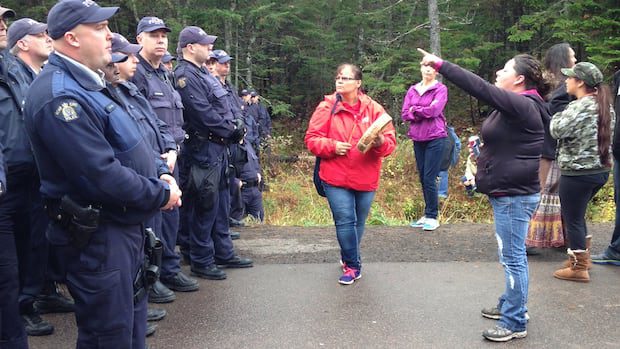
 RCMP officers line up in front of shale gas protesters on Route 134 in Rexton, N.B., on Oct. 17, 2013. (Jen Choi/CBC)
Thirteen years after standing against shale gas exploration near his community, Jason Augustine is back on the same stretch of road, facing the possibility of fighting the same battle all over again.
New Brunswick is reviewing its 12-year moratorium on fracking, raising the possibility of reviving an industry that sparked widespread opposition and historic demonstrations by First Nations more than a decade ago.
Standing on Route 134 near Rexton, N.B., where members of his community of Elsipogtog First Nation opposed shale gas exploration in 2013, Augustine is overcome with emotion.
“I knew I’d be back here for coming to pray, but not to look at what they’re trying to do with the moratorium now,” he said.
This story was brought to Nouzie by RSS. The original post can be found on https://www.cbc.ca/news/indigenous/shale-gas-moratorium-mi-kmaq-9.7390493?cmp=rss

