


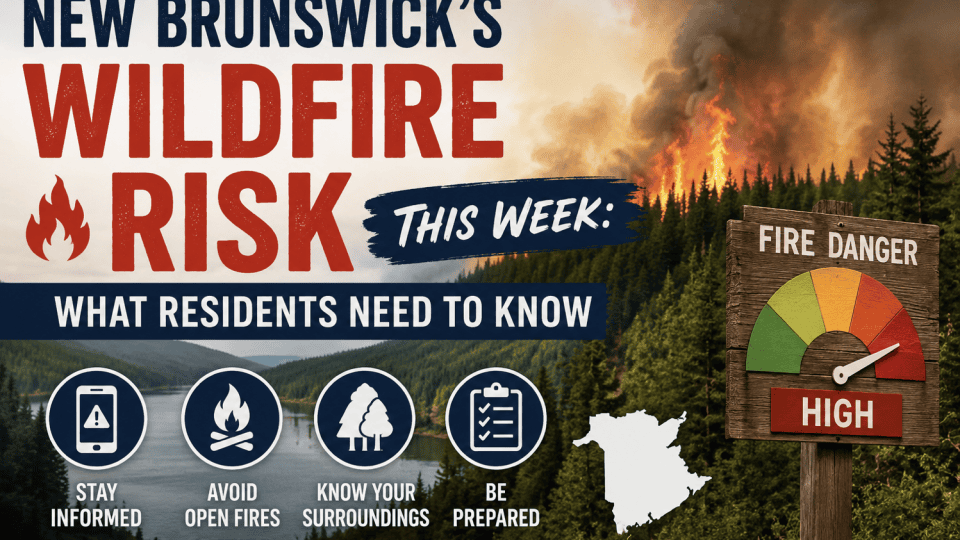
Wildfire season is well underway in New Brunswick, and this week brings a mix of active fire activity, lingering smoke effects, and the kind of hot, dry stretches that keep the risk elevated across the province. Here’s a rundown of what’s happening and how to stay prepared.
What’s burning right now
A wildfire near Oromocto Lake in southwest New Brunswick, close to Brockway, is currently listed as out of control. Officials say the wildfire is currently out of control, though the risk to the public is described as low. It’s a reminder that even smaller, remote fires can flare up quickly during dry, windy conditions, so residents in the region should keep an eye on updates rather than assume “low risk” means “no risk.”
Earlier this month, smoke from wildfires burning in Quebec drifted into the province, prompting air quality warnings. Environment Canada issued air quality warnings for northwestern New Brunswick as smoke from Quebec wildfires caused poor air quality and reduced visibility. Even when a fire isn’t burning locally, smoke transported from neighboring regions can still affect breathing conditions here, especially for people with asthma, COPD, or heart conditions.
Why this matters province-wide
New Brunswick’s wildfire season runs from the third Monday in April through October 31, and burning restrictions shift daily based on conditions. The province updates its burn status every afternoon, and campfire or brush-burning rules (Category 1 fires) can change from “burn permitted” to “restricted” to “no burn” literally overnight depending on humidity, wind, and rainfall.
Because conditions can shift quickly, the most reliable way to know your local risk level isn’t a news headline — it’s the province’s own daily burn map.
How to check your risk today
- Fire Watch burn conditions map — updated daily at 2 p.m.: http://gnb.ca/en/emergency/fire-watch/burn-map.html
- Daily burn conditions line (Category 1 fires): 1-866-458-8080, or 506-444-5445 in the Fredericton area
- To report a fire: call 911 or the Department of Natural Resources
Check your specific municipality too — cities like Fredericton and Saint John sometimes keep local restrictions in place even after the province eases provincewide rules.
Practical steps for residents this week
- Hold off on backyard burning until you’ve checked the daily status for your county — a “restricted burn” designation typically means burning is only allowed between 8 p.m. and 8 a.m.
- Be extra cautious with anything that can spark a fire — ATVs, machinery, cigarettes, and fireworks are common ignition sources during dry stretches.
- Watch air quality, not just fire maps. Smoke from fires elsewhere in Canada can push air quality into unhealthy territory even when there’s no active fire nearby. Check the Air Quality Health Index before spending extended time outdoors, and keep windows closed on smoky days.
- Have an evacuation plan ready if you live near forested or rural areas — know your route out, keep important documents accessible, and have a basic go-bag ready in case conditions escalate quickly.
- Sign up for local emergency alerts through your municipality or the New Brunswick Emergency Measures Organization so you’re notified quickly if an evacuation order is issued near you.
The bottom line
Right now, the situation in New Brunswick is manageable but active — one out-of-control fire in the southwest, recent air quality impacts from out-of-province smoke, and the ever-present possibility of rapid change in hot, dry weather. Staying informed through the province’s daily updates, rather than relying on last week’s news, is the single best thing residents can do to stay safe through the rest of wildfire season.

