

If you’ve opened your electricity bill lately and done a double-take, you’re not alone. NB Power rates have officially gone up again — and with more increases on the horizon, New Brunswickers need to understand what’s happening, why it’s happening, and what it means for their wallets.
What Just Changed
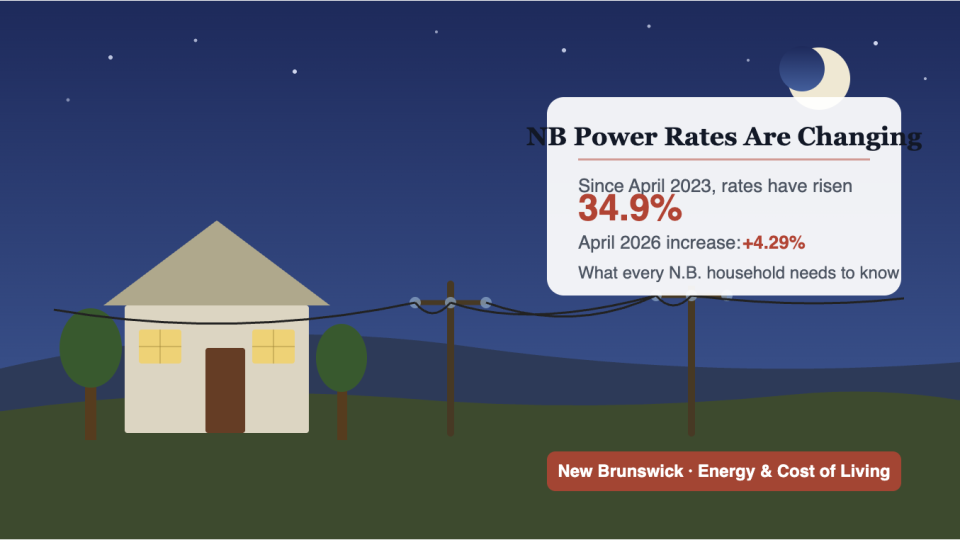
On April 14, 2026, electricity rates across New Brunswick rose by 4.29 per cent following an order from the provincial Energy and Utilities Board (EUB). The increase applies to all NB Power customers, and the province’s three municipal utilities — including Saint John Energy — adopted the same increase for their customers as well.
NB Power had originally applied for a 4.75 per cent hike, but after the EUB’s review process concluded, the board approved a slightly lower figure of 4.29 per cent.
For the average residential customer using about 1,350 kWh per month, that works out to roughly $10 to $11 more on your monthly bill — or approximately $130 per year.
The Bigger Picture: How We Got Here
This latest increase doesn’t exist in isolation. It’s the fourth consecutive rate hike that exceeds the rate of inflation. Since April 2023, electricity costs in New Brunswick have risen by approximately 34.9 per cent in total when you factor in rate riders and other charges attached to bills.
To put it plainly: if you were paying $200/month for electricity three years ago, you may now be paying close to $270 for the same usage.
Previous increases were steep — residential customers saw hikes of around 9 to 13 per cent in both 2024 and 2025 — so while the 2026 increase is painful, it is smaller than recent years. NB Power had signalled this trajectory in 2023 when it outlined a three-year plan: two large increases followed by a lower one in 2026.
What’s Driving the Increases?
NB Power states that approximately 80 per cent of the rate increase goes toward improving reliability and addressing an infrastructure deficit at its generating stations. The remaining 20 per cent reflects inflation, market prices, and customer support costs.
The utility is carrying more than $5.7 billion in debt — a figure that continues to grow as it embarks on major capital projects, including costly refurbishments at its major generating stations. The $9-billion Mactaquac Dam refurbishment, for instance, will require significant investment in the years ahead.
Aging infrastructure, increased demand for electricity, and stronger weather systems linked to climate change are all compounding pressures the utility says make continued rate increases necessary.
What About Your Bill Right Now?
Beyond the base rate increase, there’s another smaller charge worth knowing about. Starting April 1, 2026, a Variance Account Recovery (VAR) adjustment also kicked in, adding about 0.04 cents per kWh. For the average household, that’s an additional 54 cents per month — small on its own, but it adds up over time.
Check your bill for the line item labelled “Variance account amount for electricity you used” in the Current Charges section.
Is This the Last Increase?
Almost certainly not. NB Power has indicated it is tentatively planning further rate increases of around 6.5 per cent in April 2027 and another 6.5 per cent in April 2028. These numbers could change depending on the outcome of a comprehensive review of the utility’s finances and long-term strategy, but customers should plan accordingly.
Premier Susan Holt has publicly expressed frustration with the pace of rate increases, stating earlier in 2025 that “the rates can’t keep going like they’re going now.” A government-commissioned review is underway, but its recommendations have yet to fully shape NB Power’s rate path.
What Can You Do?
Here are some practical steps New Brunswick households can take to manage rising electricity costs:
Audit your energy use. NB Power offers online tools and energy audits to help identify where your home is losing energy. Sealing drafts, upgrading insulation, and switching to LED lighting can make a meaningful dent in your monthly kWh usage.
Consider time-of-use habits. Running dishwashers, dryers, and other high-draw appliances during off-peak hours (evenings and weekends) can help reduce overall consumption.
Ask about assistance programs. NB Power has customer support programs for households struggling to keep up with bills. If you’re finding it difficult to pay, contact them before falling into arrears — options like payment plans may be available.
Look at heating alternatives. Many New Brunswick homes rely heavily on electricity for heat. Heat pumps, in particular, can significantly reduce consumption compared to traditional electric baseboard heating, and there are provincial and federal rebate programs that may help offset the upfront cost.
Stay informed. NB Power’s next General Rate Application is expected to come before the EUB again for the 2027–28 fiscal year. Public hearings give residents and community groups the opportunity to participate in the process.
The Bottom Line
Rate increases of this scale are a real burden for New Brunswick families, especially those already managing rising costs for groceries, housing, and other essentials. The reasons behind the increases — aging infrastructure, debt, and ambitious capital projects — are real and complex, but so is the pressure on household budgets.
Being informed, managing your consumption where possible, and taking advantage of available programs won’t eliminate the impact, but they can help you navigate it. Keep an eye on your bill, review your energy habits, and stay engaged with what’s happening at the EUB as the rate conversation continues in the years ahead.

