


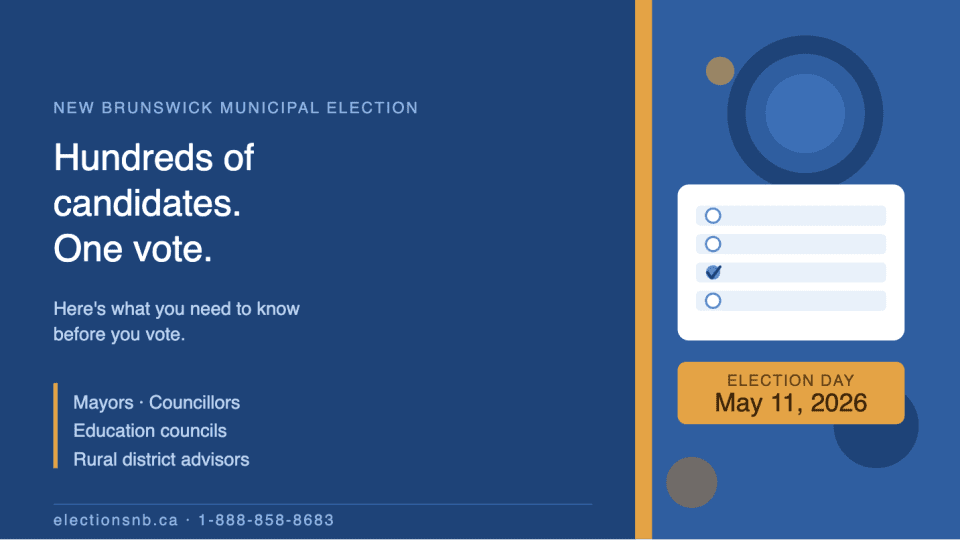
Municipal elections in New Brunswick will be held on May 11, 2026, and voters across the province will be choosing mayors, councilors, District Education Council representatives, and all other elected officials in every municipality. With nominations having closed on April 10th, the full candidate lists are now taking shape — and this election cycle is one of the most active in recent memory.
Here’s everything you need to know before you head to the polls.
What are you actually voting for?
Province-wide, residents will be electing Local Government Council members, Rural District Advisory Committee members, and District Education Council representatives. Depending on where you live, your ballot may include a race for mayor, several councillor seats, and one or more education council positions.
It’s worth understanding what these roles actually do. Elected officials help set priorities, approve budgets, and oversee local services such as infrastructure, recreation, and community programs. The mayor, in particular, serves as the head of Council, chairs Council meetings, works with councillors and staff, and represents the community at official events.
If you live outside a municipality proper, you may also be voting for a Rural District Advisory Committee member. There are 12 rural districts in New Brunswick, represented by advisory committees with a total of 40 elected members. These members serve as advisors to the Minister of Local Government on local and regional decisions.
These are non-partisan races — here’s why that matters
Municipal elections in New Brunswick are non-partisan. That means you won’t see party labels on the ballot or on campaign signs. Candidates run as individuals, which puts more of the research burden on you as a voter. You’ll want to look up candidates directly — check their websites, social media, and any local all-candidates forums happening in your area in the coming weeks.
Are you on the voters list?
Before anything else, confirm you’re registered. The revision period for the voters list closes May 7, 2026 — after that date, you cannot be added or make changes before Election Day.
If you voted in the last province-wide election, you should already be on the list, but occasionally people are missed. Contact your Returning Office or Elections NB to confirm your name is listed properly. You can also update your registration through the Elections NB Voter Registration Portal at electionsnb.ca.
When and how can you vote?
You can vote in person at your designated polling station on Election Day between 10 a.m. and 8 p.m. Your polling station will be printed on your Voter Information Card. These cards are expected to be mailed out around April 27, 2026.
Can’t make it on May 11? You have options:
Advance polls: Advance polling locations will be posted on the Elections NB website closer to the election.
Vote by mail: If you will be away from your municipality, are housebound, or otherwise cannot vote in person, you can vote by mail — any registered elector is eligible. Your completed ballot must arrive at the returning office before 8:00 p.m. on Election Day, and you are responsible for return shipping.
Voting at the returning office: During an election, returning offices are open Monday to Saturday, and you can cast your vote there throughout the election period.
What if you’re not on the voters list?
Don’t panic. Eligible voters can visit a returning office up to four days prior to the election with their completed application and supporting ID to ensure they appear on the list used at the polling station. Voters can also bring their ID to their assigned polling station and vote immediately, or be personally vouched for by another voter on the same list.
How to research the candidates
With hundreds of candidates on ballots across the province, it’s impossible to know them all — but your local ballot is manageable. Here’s a practical approach:
- Find your candidates: The full list is now available through Elections NB at electionsnb.ca following the April 10 nomination deadline.
- Look for local debates: Many communities hold all-candidates forums in the weeks before election day. Check your local newspaper, community Facebook groups, and municipal websites.
- Read local news: Local outlets in your area are the best source for candidate profiles and coverage of local issues.
- Check candidate platforms: Most candidates running for mayor or councillor will have social media pages or websites outlining their priorities.
The issues driving this election vary by community, but common themes across NB municipalities include housing affordability, infrastructure investment, recreational services, and the ongoing impacts of the 2023 local government reform that restructured many communities across the province.
The bottom line
Local elections decide who controls your roads, your rec centre, your zoning, and your tax rate. Voter turnout in municipal elections is historically lower than in provincial or federal races — which means your vote carries even more weight. Election Day is May 11. Polls are open 10 a.m. to 8 p.m.
For the official candidate list, your polling station location, and registration information, visit electionsnb.ca or call 1-888-858-8683 (VOTE).

