

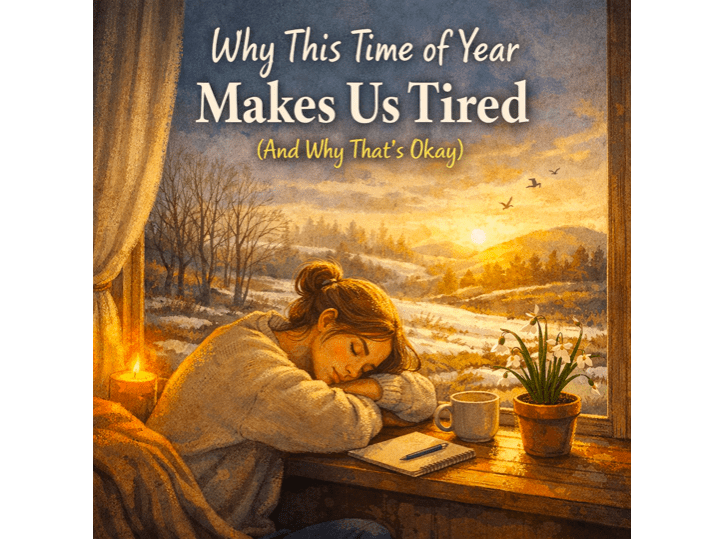
There’s a particular kind of tired that shows up around this time of year.
It’s not the dramatic burnout of December.
It’s not the fresh-start adrenaline of early January.
It’s a quieter, heavier fatigue — the kind that lingers in the mornings and settles in by mid-afternoon.
If you’ve been feeling it, you’re not alone.
And more importantly? Nothing is wrong with you.
The In-Between Season Is Sneakily Exhausting
Late winter (or very early spring, depending on where you live) is a season of contradiction.
The days are technically getting longer, but they still feel short.
The calendar says we’re moving forward, but the weather often says otherwise.
We’re craving change, but still wrapped in routine.
That tension takes energy.
We’re holding two realities at once:
- Winter isn’t fully done.
- Spring hasn’t fully arrived.
Living in that “almost” space can be surprisingly draining.
Your Body Is Still in Winter Mode
Even if you’re mentally ready for lighter days, your body may still be conserving energy.
For months, we’ve adapted to:
- Less sunlight
- Colder temperatures
- More time indoors
- Slower rhythms
Our nervous systems don’t instantly switch gears just because the calendar flips to March.
Seasonal transitions ask your body to recalibrate — sleep cycles shift, light exposure changes, routines adjust. That recalibration can feel like fatigue.
It’s not laziness.
It’s biology.
The Pressure to Feel Energized Doesn’t Help
There’s also subtle social pressure this time of year.
We start seeing messages about:
- Spring cleaning
- Big goals
- Fresh starts
- Getting “back on track”
When your energy doesn’t match that momentum, it’s easy to think you’re behind.
But growth in nature doesn’t happen all at once.
It happens gradually. Quietly. Beneath the surface.
You’re allowed to thaw slowly.
Emotional Fatigue Is Real, Too
By this point in the year, we’ve:
- Pushed through holidays
- Survived the darkest months
- Managed work, family, responsibilities
- Carried whatever personal challenges came with winter
Even if nothing dramatic happened, simply enduring a long season takes emotional energy.
Sometimes the tiredness we feel now is just the exhale.
Why It’s Actually Okay to Feel This Way
This seasonal tiredness isn’t a flaw — it’s a transition.
And transitions are rarely glamorous.
Instead of fighting it, consider what it might be asking for:
- A slightly earlier bedtime
- One less commitment
- More light, more air, more water
- Gentler expectations
You don’t have to bloom overnight.
Rest is not a setback.
Slowness is not failure.
Low energy is not a personal weakness.
It might just mean you’re human — moving through a season that asks for patience.
A Softer Way to Move Forward
If you can, try this:
Instead of asking, “Why am I so tired?”
Ask, “What kind of support do I need right now?”
Maybe it’s:
- A short walk in the afternoon light
- A tidy corner instead of a full house overhaul
- A simple meal instead of a productivity sprint
- A quiet evening without guilt
This time of year doesn’t demand reinvention.
It invites gentleness.
And if you’re feeling tired?
That might just be your cue to move a little slower — until the light fully catches up with you.

